表示經常的或習慣性的動作,常與表示頻率的時間狀語連用。 時間狀語:always,usually,every morning/night/evening/day/week/year,often,sometimes,occasionally,from time to time,twice a week,rarely,seldom,once a month,hardly,ever,never. e.g. I leave home for school at 7:00 every morning.我每天早上7點左右離開家去學校。
描述主語的狀態、性質、特徵、能力等,目的是為了“描述現階段的動作或者狀態。 e.g. I don't want so much.我不想要太多。 Wang An writes good English but doesn't speak well.王安英語寫得很好但是說的不好 比較:Now I put the sugar in the cup.現在我把一些糖放杯子裡面。 I am doing my homework now.現在我正在寫我的作業。 第一句用一般現在時,用於操作演示或指導說明的示範性動作,表示言行的瞬間動作。再如:Now watch me,I switch on the current and stand back. 第二句中的now是進行時的標誌,表示正在進行的動作的客觀狀況,所以後句用現在進行時。
陳述客觀真理,客觀存在,科學事實。 The earth moves around the sun.地球繞著太陽轉。 Shanghai lies in the east of China.上海市在中國的東部。
1.如果主語是名詞複數和第一人稱I、 we ,謂語動詞不用做任何變化,即仍然用動詞原形表示: We usually go to school at 7:30. 我們通常7:30上學去。[go] My parents give ten yuan to my sister every week.我父母每星期給我妹妹十元錢。[give]
3.謂語動詞的變化規律是: ⑴ 在動詞後加-s,-es read - reads,write - writes,say - says ⑵ 以s,x,ch,sh,o 結尾的詞加-es teach - teaches,wash - washes,guess - guesses ⑶ 以輔音字母+y結尾的詞變y為i再加-es try - tries,carry - carries ⑷ 特殊變化的詞 be (是) - am,is,are I am she/he/it,名詞單數都用 is we,you,they,名詞複數都用are have (有) - have,has I,we,you,they,名詞複數都用have she/he/it is,名詞單數都用 has ⑸助動詞,不論單複數、不論什麼人稱都沒有變化,都用 can,may,must,need,ought to 等。而且,句子中有了助動詞,謂語動詞就不需要有任何變化了,即用動詞原形表示。 請看下面的例子: We have six classes every day. 我們每天上六節課。 I often get up at 6:30. 我經常6:30起床。 Jack likes Chinese food very much.傑克很喜歡中國飲食。 We can see some pictures on the wall. 我們能看到牆上的畫。一般現在時
4.一般現在時常用的時間詞語 常用於一般現在時的詞語有 sometimes/usually/often/every day(week,year)/ now/always 等。請記住:這些時間詞語只是輔助作用,這些詞語也可用於其它的時態,所以謂語動詞變化才是最關鍵的。 注意:當表現強烈的感情色彩時,儘管有如 always/never/seldom 等頻率副詞,但一般在頻率副詞前加上be動詞,後面變為動詞的現在分詞形式。 例:My father loses his key again. He is always losing his key.我的爸爸再一次丟了他的鑰匙。他總是掉鑰匙。
句型
疑問句
1.對於謂語動詞或助動詞是 be、can/may/must 等,將這些詞移到主語前面。
Are you students?Yes,we are. / No,we aren't.你們是一名學生嗎?是的。我們是一名學生。/不,我們不是。 Is Jane in the classroom? Yes,she is. / No,she isn't.簡在這個教室裡面嗎?是的,她在。/不,她不在。 Does the house have two rooms? Yes,it does / No,it doesn't.這棟房子裡面有兩個房間嗎?是的/不,不是。 Is there any water in the glass? Yes,there is. / No,there isn't.杯子裡面有水嗎?是的,有。/不,沒有。 Can you swim? Yes,I can. / No,I can't.你會游泳嗎?是的,我會。/不,我不會。
Do you know it?Yes,I do. / No,I don't.你知道這個嗎?是的,我知道/不,我不知道。 Does she have a pen?Yes,she does. / No,she doesn't.[have 這裡是實義動詞]她有一個鋼筆嗎? Do they play basketball after school? Yes,they do. / No,they don't.他們放學後打籃球嗎?
否定句
I am not at college.我不在上大學。 Mr. Wang isn't 50 years old.王先生不是50歲。 The Jacksons doesn't have two sons.賈克森沒有兩個兒子。 You may not go now.你現在不可能去了。
I don't have lunch at home.我在家沒有吃午餐。 They don't play basketball on the sportsground.他們不在運動場上打籃球。 Mr.Jimmy doesn't know French.吉米先生不會法語。
表將來
在一些情況下,一般現在時能用來表示將來時。
1. 謂語動詞是:come,go,arrive,leave,start,begin,return,live,fly 等,可以表示將來發生的動作。 The train leaves at six tomorrow morning. When does the bus start? It starts in ten minutes.
2. 在時間或條件從句中,一般要用一般現在時表示將來,而不用一般將來時。 When Bill comes,ask him to wait for me. I'll write to you as soon as I arrive there.
3. 謂語動詞是 hope,take care that,make sure that 等後的賓語從句中,用一般現在時表示將來。 I hope they have a nice time next week. Make sure that the windows are closed before you leave the room.
4.這種時態可以和一個時間短語連用以表示已確定的、對將來的安排: 如:The boys start school on Monday.男孩們星期一開學。 I leave tonight.我今天晚上動身。
5.這一用法代替了較常用的現在進行時態: 如:The boys are starting school on Monday.男孩兒們星期一就要開學了。 I’m leaving tonight.我今天晚上就動身。
6.這兩種時態之間的差別是: ⑴一般現在時比現在進行時具有的個人色彩更少:I’m leaving tonight通常可能含有我決定離開的意思,但I leave tonight可指這是計畫的一部分,但計畫不一定是我訂的。 ⑵一般現在時要比現在進行時聽起來更為正式。計畫開辦一個新分店的百貨商店很可能說Our new branch opens next week(本店新設分店下周開業),而不說Our new branch is opening next week。 ⑶現在進行時顯得累贅的地方就用一般現在時,例如在談到像旅程安排那樣的一系列預定的將來的動作時,可以這樣說: We leave at six,arrive in Dublin at ten and take the plane on… 我們6點出發,10點到達都柏林,並在……乘飛機…… 而不說: We are leaving at six,arriving in Dublin at ten and taking the plane on然而要注意,在像My train leaves at six(我常乘坐的火車6點開)這樣的句子中,用一般現在時表示習慣性動作,這裡就不能用現在進行時來代替。
表過去
用於某些動詞(tell,say,hear,learn,gather等)表示不確定的過去時間: John tells me you will leave tomorrow.約翰告訴我你明天離開。 I hear that he got married again last month. 我聽說他上個月結婚了。 Mary says that you told her to come over here.瑪麗說是你讓她到這兒來的。
當要陳述一個客觀事實時,有時即使有過去時間狀語也可用一般現在時:
The story is set in the summer of 1937. 故事的背景是1937年夏天。
The story begins in the year 1937. 故事開始於1937年。
被動語態
am/is/are done
比較辨析
一般現在時與現在進行時的區別
準確理解兩種時態的主要含義:
一般現在時
現在進行時
1.表示事物的本質特性或客觀存在,沒有時限性。The table ____ soft。(feels) 表特性特徵。 Japan ___ in the east of China。 (lives) 表客觀事實 2.現階段經常性、習慣性的行為,可帶頻率時間。 The shop closes at 7:30 p.m. Father doesn’t smoke. (習慣) 3.表說話時的狀態,感覺或結果,一般用狀態動詞,如:It doesn’t matter. Does it hurt? (感覺結果) 4.特殊用法: -在條件、時間下、在讓步從句中用現在時代替將來。 -If you go there,I’ll help you. —用在begin,come,go,leave,return,open,close 等短暫謂語動詞表規定計畫。 The plane takes off at 11:30. (不受主觀支配的計畫) -在劇本、解說、標題或there(here)開頭的句中表進行 There goes the bell/Here comes Mr.Wang. I declare the meeting opens.(正在宣布) He meets the ball and hits back to No.2 (正在發生)
1.說話時正在發生,進行的動作 Look! Dark clouds are gathering . (正在發生) 2.表現階段正在進行,但此刻不一定正在進行的事。 He usually gets up at 6:00,but this week he is getting up at 7:00. (現階段正在進行,但說話時不一定在起床) 3.現在進行時的特殊意義 -表示主觀打算常用於 go,come,leave,start,begin 等,位移、趨向動詞。 How long are you staying here (準備停留) -表示眼前剛過去的語意即“話音剛落”,適用於tell,say,talk,discuss …. You don’t believe it You know I’m telling the truth. -表示安慰、關心、喜歡、討厭等感情色彩。 He is always making noises in class. (討厭) -在條件、時間、讓步狀語從句中表示將來正在進行。 Don’t bother him if he is reading this time tomorrow.
嚴格區分進行時與一般時的語義
持續動詞的一般時表持續情況,經常性,習慣性行為或客觀存在的事實,進行時表暫時性或有限時刻的持續。
短暫動詞的一般時敘述事實,特徵,能力而短暫動作進行時描述反覆發生,即將發生或剛開始行為。
短暫動詞和靜態動詞一般時表示實際情況客觀狀態、結果、特徵、特性,進行時表未完成含開始或漸進之意。 The bus stops. (車停了-事實) The bus is stopping. (漸漸停下來) I love the job. (靜態事實) I am loving the job. ( 漸漸愛上了)
come,go,leave,start,return,move,reach,sail,fall 等一般時態表客觀規定計畫,進行時表主觀打算推測。 Flight 254 leaves at 5:30. (表客觀規定計畫) The plane is taking off an hour later.(主觀判斷)
現在進行時帶always,continually, constantly, for ever等頻率副詞表感情色彩,一般現在時則沒有此用法。
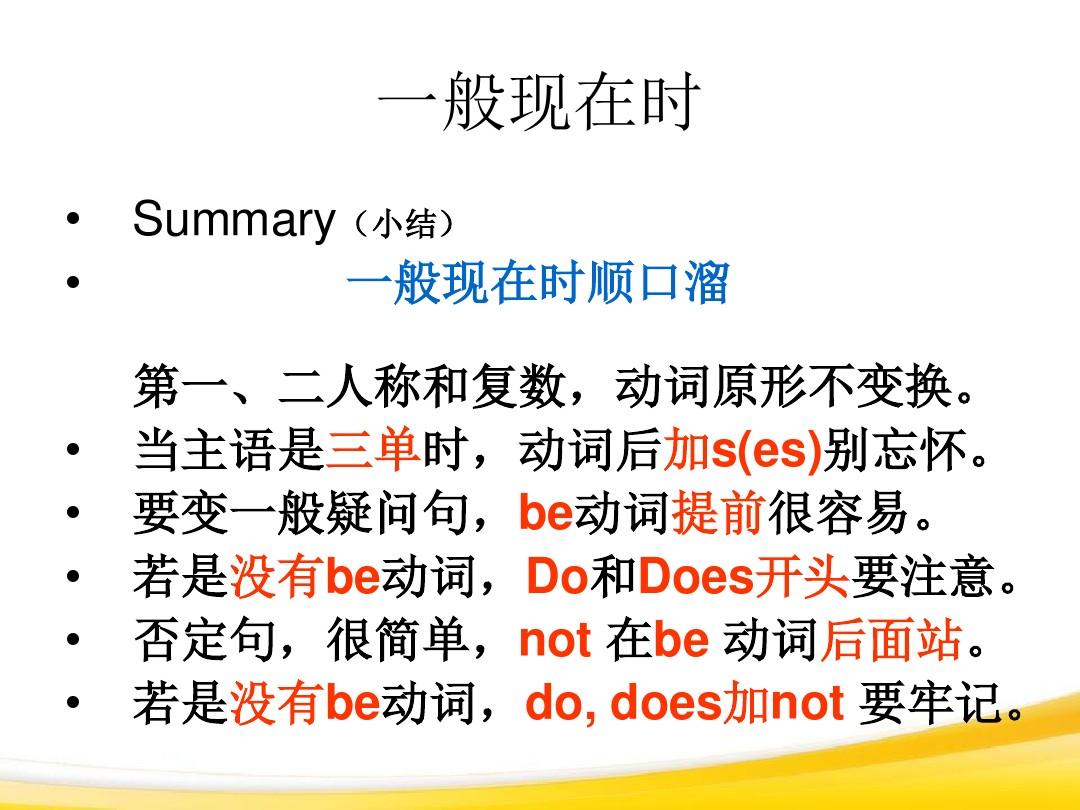
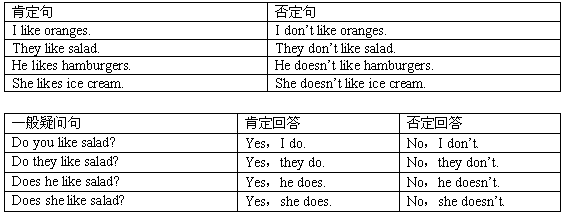 一般現在時用法表
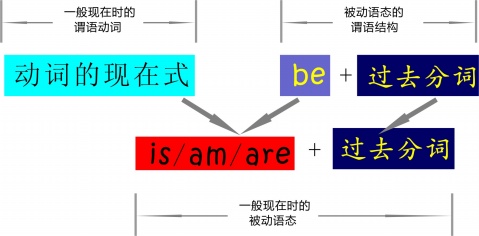 一般現在時的分析
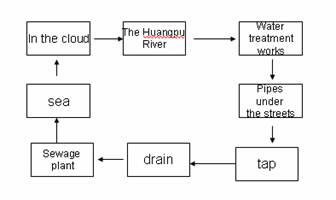 一般現在時
一般現在時