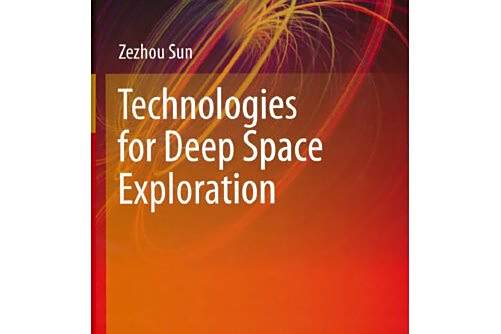
《Technologies for deep space exploration》是2020年北京理工大學出版社出版的圖書,作者是孫澤洲。
基本介紹
- 中文名:Technologies for Deep Space Exploration(深空探測技術)
- 作者:孫澤洲
- 出版社:北京理工大學出版社
- ISBN:9787568290296
內容簡介,圖書目錄,出版背景,作者簡介,
內容簡介
This book offers readers essential insights into system design for deep space probes and describes key aspects such as system design, orbit design, telecommunication, GNC, thermal control, propulsion, aerobraking and scientific payload. Each chapter includes the basic principles, requirements analysis, procedures, equations and diagrams, as well as practical examples that will help readers to understand the research on each technology and the major concerns when it comes to developing deep space probes. An excellent reference resource for researchers and engineers interested in deep space exploration, it can also serve as a textbook for university students and those at institutes involved in aerospace.
圖書目錄
1 Introduction
1.1 The Significance of Deep Space Exploration
1.2 Overview of Deep Space Exploration Development
1.2.1 Overview of International Deep Space Exploration Development
1.2.2 Overview of Deep Space Exploration Development in China
1.2.3 Development Trends of Deep Space Exploration
1.3 Future Development Requirements for Deep Space Exploration Technologies
1.4 Prospects
References and Related Reading
2 Characteristics of Deep Space Environment and Corresponding Impact
2.1 Introduction
2.2 Geospace Environment
2.2.1 Main Geospace Environment Characteristics for Deep Space Probes
2.2.2 Impact of Geospace Environment on Deep Space Probes
2.3 Lunar Space Environment
2.3.1 General
2.3.2 Lunar Radiation Environment and Impacts
2.3.3 Lunar Atmosphere and the Impact
2.3.4 Lunar Soil/Lunar Dust and Impacts
2.4 Space Environment of Mars
2.4.1 Overview
2.4.2 Mars Radiation Environment and Its Impact
2.4.3 Impact of Mars Atmospheric Environment
2.4.4 Impact of Mars Dust Environment
2.4.5 Landforms on the Surface of Mars
2.5 Space Environment of Jupiter
2.5.1 Overview
2.5.2 Jupiter's Strong Magnetic Field Environment
2.5.3 Strong Radiation Environment of Jupiter
2.5.4 Jupiter Plasma Environment
2.5.5 Jupiter Atmosphere
2.6 Space Environment of Venus
2.6.1 Overview
2.6.2 Magnetic Field of Venus
2.6.3 Venus Atmosphere
2.6.4 Venus Surface Topography
2.7 Other Interplanetary Space Environments
2.7.1 Interplanetary Environment
2.7.2 Asteroid Environment
2.7.3 Comet Environment
2.8 Outlook
References and Related Reading
……
3 System Design Technology
4 Technology of Orbit Design
5 Payload Technology
6 Guidance, Navigation and Control Technology
7 Atmospheric Braking Technology
8 TT&C and Communication Technology
9 Thermal Control Technology
10 Propulsion Technology
11 Power Supply Technology
12 Autonomous Management and Tele-operation Technology
13 Mechanism Technology
14 Ground Test Verification Technology
出版背景
China's space technology and science research have earned a place in the world, but have not been compiled into a series of systematic publications yet. In 2018, the series Space Science and Technology edited mainly by me and co-authored by the leading figures in China's space industry was published in China, when China Academy of Space Technology was celebrating the 50th anniversary of its founding. This collection contains 23 volumes in Chinese, only 10 of which have been selected, recreated and translated into English. In addition, each English volume has been recreated at the suggestion of the Springer, by deleting the contents similar to Springer's existing publications and adding the contents that are internationally advanced and even leading, and bear both Chinese characteristics and worldwide universality. This series fully reflects the knowledge and engineering experience recently accumulated by Chinese scientists and engineers in space technology and science research.
As Editor in Chief of this series, I always insist that this collection must be of high quality, either in Chinese version or in English version. First, the contents of this series must be condensed and sublimated based on the combination of theory and practice, so as to provide both a theoretical value and engineering guidance. Second, the relationships between past knowledge and state of the art and between other people's work and our own new findings should be properly balanced in the book contents to ensure the knowledge systematicness and continuity and to highlight new achievements and insights. Each volume intends to introduce the readers something new. Third, the English version should be customized for international exposure and play a solid supporting role for China to contribute to the world's space field.
作者簡介
孫澤洲,研究員,博士生導師,航天深空探測領域專家,現任職於中國空間技術研究院總體部,“嫦娥四號”、火星探測器總設計師。
主要從事深空探測項目論證、探測器總體設計等方向的研究工作。主持研製“嫦娥四號”,並成功完成了人類探測器首次月背軟著陸和巡視探測。曾獲國家科技進步特等獎、國防科學技術獎特等獎等多項獎勵,榮獲全國五一勞動獎章、中國青年五四獎章、中國青年科技獎、光華工程青年獎,入選“萬人計畫”科技創新領軍人才。在國內外期刊發表論文30餘篇。
