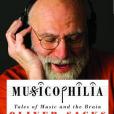
《Musicophilia》是神經學家奧利弗·薩克斯於2007年出版的神經科學著作,由Random House Audio出版。該書基於臨床案例研究,探討音樂對人類大腦功能的複雜影響,延續了作者醫學觀察與人文敘事結合的寫作風格。
書中通過異常神經病例解析音樂與腦科學的關係:包括因意外獲得音樂天賦的個體、先天失樂症患者、阿爾茨海默病人通過旋律喚醒記憶等案例。研究顯示音樂能激活語言區外的廣泛腦區,對帕金森病患者的運動障礙及中風患者語言恢復具有特殊作用,同時分析音樂誘發幻覺、強迫性迴響等現象的神經機制。書中章節如《Kinetic Melody: Parkinson's Disease and Music Therapy》系統論述了音樂治療的臨床實踐。
基本介紹
- ISBN:9780739357392
- 作者:Oliver Sacks
- 出版社:Random House Audio
- 出版時間:2007年10月16日
- 定價:USD 29.95
- 裝幀:Audio CD
內容簡介
Music can move us to the heights or depths of emotion. It can persuade us to buy something, or remind us of our first date. It can lift us out of depression when nothing else can. It can get us dancing to its beat. But the power of music goes much, much further. Indeed, music occupies more areas of our brain than language does—humans are a musical species. Oliver Sacks’s compa...(展開全部) Music can move us to the heights or depths of emotion. It can persuade us to buy something, or remind us of our first date. It can lift us out of depression when nothing else can. It can get us dancing to its beat. But the power of music goes much, much further. Indeed, music occupies more areas of our brain than language does—humans are a musical species. Oliver Sacks’s compassionate, compelling tales of people struggling to adapt to different neurological conditions have fundamentally changed the way we think of our own brains, and of the human experience. In Musicophilia, he examines the powers of music through the individual experiences of patients, musicians, and everyday people—from a man who is struck by lightning and suddenly inspired to become a pianist at the age of forty-two, to an entire group of children with Williams syndrome, who are hypermusical from birth; from people with “amusia,” to whom a symphony sounds like the clattering of pots and pans, to a man whose memory spans only seven seconds—for everything but music. Our exquisite sensitivity to music can sometimes go wrong: Sacks explores how catchy tunes can subject us to hours of mental replay, and how a surprising number of people acquire nonstop musical hallucinations that assault them night and day. Yet far more frequently, music goes right: Sacks describes how music can animate people with Parkinson’s disease who cannot otherwise move, give words to stroke patients who cannot otherwise speak, and calm and organize people whose memories are ravaged by Alzheimer’s or amne
