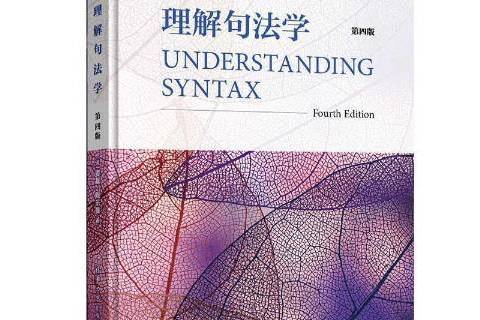
《理解句法學》是由英國學者Maggie Tallerman與清華大學崔剛教授合著的句法學教材,2020年5月由清華大學出版社出版第四版。該書以轉換生成語法為理論框架,旨在為語言學專業學習者提供系統性知識體系。
全書分章節系統闡述句法結構檢驗、詞類劃分、語法關係轉換等核心內容,結合全球百餘種語言的實例分析被動化、疑問句構造等跨語言現象。書中採用遞進式理論講解與章節練習題,附錄收錄威爾斯語案例及術語表,配套中文章節導讀與實例注釋,兼顧理論與實踐教學需求。作為修訂四版的國際通用教材,其內容涵蓋基礎概念至研究方法,適用於句法學入門學習與研究參考。
基本介紹
- 中文名:理解句法學
- 作者:Maggie Tallerman 崔剛
- 出版時間:2020年5月
- 出版社:清華大學出版社
- ISBN:9787302544753
- 類別:教材
- 定價:99 元
- 開本:16 開
- 裝幀:平裝-膠訂
內容簡介,圖書目錄,
內容簡介
本書全面涵蓋了語言學重要分支,句法學研究的主要概念與範疇。歷經多次修訂,是一本句法學入門教材和句法分析訓練教材。作者基於轉換生成語法理論和思想,講解層層遞進、由淺入深,練習涉及豐富,切實訓練讀者分析問題和解決問題的能力。在閱讀完本書之後,讀者可以掌握句法學的基本概念和理論,並且具備初步的進行句法分析和研究的能力。 讀者對象:高校英語系語言學專業師生、句法學理論研究者、中文系語言學專業師生等
圖書目錄
Contents
Note to the instructor xxvi
Note to the student xxvii
Acknowledgements xxix
Abbreviations used in examples xxx
Tables and figures xxxi
1 What is syntax? 1
章節導讀 1
1.1 Some concepts and misconceptions 2
1.1.1 What is the study of syntax about? 2
1.1.2 Language change 9
1.2 Use of linguistic examples 13
1.2.1 Why not just use examples from English? 13
1.2.2 How to read linguistic examples 14
1.3 Why do languages have syntax? 20
1.3.1 Word order 21
1.3.2 Promotion and demotion processes 23
1.3.3 All languages have structure 25
Further reading 28
Exercises 29
Notes 34
2 Words belong to different classes 35
章節導讀 35
2.1 Identifying word classes 37
2.1.1 How can we tell that words belong to di erent classes? 37
2.1.2 Starting to identify nouns, adjectives and verbs 38
2.1.3 An illustration: How do speakers of a language identify
word classes? 41
2.2 Verbs 44
2.2.1 An introduction to verb classes 44
2.2.2 Verbs and their grammatical categories 47
2.3 Nouns 51
2.3.1 Semantic roles for noun phrases 51
2.3.2 Syntactic roles for noun phrases 52
2.3.3 Nouns and their grammatical categories 56
2.3.4 Nouns, de? niteness and determiners 59
2.4 Adjectives 61
2.4.1 Positions and functions of adjectives 61
2.4.2 Adjectives and intensi? ers 63
2.4.3 Adjectives and their grammatical categories 63
2.4.4 Are adjectives essential? 64
2.5 Adverbs 67
2.5.1 Adverbs and adjectives 67
2.5.2 e adjunct function 68
2.6 Prepositions 69
2.6.1 Identifying prepositions in English 69
2.6.2 Postpositions 71
2.6.3 Grammatical categories for adpositions 71
2.7 Conclusion 72
Further reading 73
Exercises 73
3 Looking inside sentences 81
章節導讀 81
3.1 Finiteness and auxiliaries 82
3.1.1 Independent clauses 82
3.1.2 Finiteness 84
3.1.3 Main verbs and verbal auxiliaries 85
3.1.4 Ways to express the grammatical categories for verbs 88
3.1.5 Non-? nite verbs 89
3.1.6 Co-ordination of clauses 93
3.1.7 Summary 93
3.2 Introduction to subordination 94
3.2.1 Complement clauses 94
3.2.2 Adjunct or adverbial clauses 98
3.2.3 Identifying subordinate clauses 98
3.2.4 Special properties of root clauses 100
3.2.5 Some cross-linguistic variation in subordination 103
3.2.6 Summary: Properties of subordinate clauses and root
clauses 104
3.3 Major cross-linguistic variations 105
3.3.1 e co-ordination strategy 105
3.3.2 Nominalization 106
Contents xxiii
3.3.3 Serial verbs 107
3.3.4 Summary 110
Further reading 111
Exercises 111
4 Heads and their dependents 120
章節導讀 120
4.1 Heads and their dependents 121
4.1.1 What is a head? 121
4.1.2 e inuence of heads on their dependents 123
4.1.3 Summary: e properties of heads 124
4.1.4 More about dependents: Adjuncts and complements 125
4.1.5 More about verb classes: Verbs and their complements 127
4.1.6 Other heads and their complements 130
4.1.7 Summary: e main properties of complements vs.
adjuncts 131
4.1.8 Is the noun phrase really a determiner phrase? 132
4.1.9 Phrases within phrases 133
4.2 Where does the head occur in a phrase? Head-initial and
head-? nal languages 133
4.2.1 Head-initial languages 134
4.2.2 Head-? nal languages 135
4.2.3 An exercise on head-initial and head-? nal
constructions 136
4.3 Head-marking and dependent-marking languages 137
4.3.1 De? nitions and illustrations: Syntactic relationships
between heads and dependents 137
4.3.2 Head adposition and its NP object 138
4.3.3 e clause: A head verb and the arguments of the verb 140
4.3.4 Head noun and dependent possessor NP 143
4.3.5 Head noun and dependent AP 144
4.3.6 An exercise on head-marking and dependent-marking 145
4.3.7 Some typological distinctions between languages 146
4.3.8 Summary 149
Further reading 149
Exercises 150
5 How do we identify constituents? 158
章節導讀 158
5.1 Discovering the structure of sentences 159
5.1.1 Evidence of structure in sentences 159
5.1.2 Some syntactic tests for constituent structure 161
5.1.3 Introduction to constituent structure trees 167
5.1.4 Summary 172
5.2 Relationships within the tree 172
5.3 Developing detailed tree diagrams and tests for constituent
structure 175
5.3.1 Verb classes and constituent structure tests 175
5.3.2 e co-ordination test for constituency 182
5.3.3 Do all languages have the same constituents? 184
5.3.4 An introduction to the bar notation 185
5.4 Summary 189
Further reading 189
Exercises 190
Note 195
6 Relationships within the clause 196
章節導讀 196
6.1 Indicating grammatical relations in the clause 197
6.2 Order of phrases within the clause 199
6.2.1 Basic and marked orders 199
6.2.2 Statistical patterns 200
6.3 Case systems 203
6.3.1 Ways of dividing core arguments 203
6.3.2 Nominative/accusative systems 205
6.3.3 Ergative/absolutive systems 206
6.3.4 Split systems I 208
6.3.5 Marked and unmarked forms 210
6.4 Agreement and cross-referencing 211
6.4.1 What does verb agreement involve? 211
6.4.2 Nominative/accusative agreement systems 212
6.4.3 Ergative/absolutive agreement systems 215
6.4.4 Split systems II 216
6.5 Grammatical relations 217
6.5.1 Investigating core grammatical relations 217
6.5.2 Subjects: Typical cross-linguistic properties 217
6.5.3 An examination of subjects in speci? c languages 219
6.5.4 Objects 226
6.6 Free word order: A case study 228
6.7 Summary 231
Further reading 232
Exercises 233
Contents xxv
7 Processes that change grammatical relations 241
章節導讀 241
7.1 Passives and impersonals 242
7.1.1 e passive construction and transitive verbs 242
7.1.2 e impersonal construction 248
7.2 e antipassive 249
7.2.1 Basic facts 249
7.2.2 Primary grammatical relations and grammatical pivot 251
7.3 e applicative construction 257
7.4 e causative construction 261
7.5 Summary 266
Further reading 266
Exercises 266
Notes 276
8 Wh-constructions: Questions and relative clauses 277
章節導讀 277
8.1 Wh-questions 278
8.1.1 Languages with wh-movement 278
8.1.2 Languages with wh-in-situ wh-questions 282
8.1.3 Multiple wh-questions 284
8.2 Relative clauses 286
8.2.1 Relative clauses in English 286
8.2.2 Cross-linguistic variation in relative clauses 289
8.3 Focus movements and scrambling 295
8.4 Some conclusions 297
Further reading 298
Exercises 298
Note 308
9 Asking questions about syntax 309
章節導讀 309
9.1 Syntactic description: What questions to investigate 310
9.2 A case study: Grammatical sketch of Colloquial Welsh 313
9.3 Some questions concerning syntax 320
9.4 Last words: More syntax ahead 324
Sources of data used in examples 326
Glossary 329
References 334
