1. Lin J, Lai M, Huang Q, Ma Y, Cui J, Ruan W. Methylation patterns of IGFBP7 in colon cancer cell lines are associated with levels of gene expression. The Journal of pathology 2007;212: 83-90.
IF 5.423
2. Lu B, Xu J, Zhu Y, Zhang H, Lai M. Systemic analysis of the differential gene expression profile in a colonic adenoma-normal SSH library. Clinica chimica acta; international journal of clinical chemistry 2007;378: 42-7.
IF 2.601
3. MD L, Xujing. Ribosomal proteins and colorectal cancer. Current Genomics 2007;8: 43-9.
IF 0.573
4. Ruan W, Lai M. Actin, a reliable marker of internal control? Clinica chimica acta; international journal of clinical chemistry 2007;385: 1-5.
IF 2.601
5. Ruan W, Xu E, Xu F, et al. IGFBP7 plays a potential tumor suppressor role in colorectal carcinogenesis. Cancer biology & therapy 2007;6: 354-9.
IF 2.873
6. Wang Y, Ma Y, Lu B, Xu E, Huang Q, Lai M. Differential expression of mimecan and thioredoxin domain-containing protein 5 in colorectal adenoma and cancer: a proteomic study. Exp Biol Med (Maywood) 2007;232: 1152-9.
IF 1.979
7. Xu E, Xia X, Lu B, et al. Association of matrix metalloproteinase-2 and -9 promoter polymorphisms with colorectal cancer in Chinese. Mol Carcinog 2007.
IF 3.194
8. Xu F, Wang F, Di M, et al. Classification based on the combination of molecular and pathologic predictors is superior to molecular classification on prognosis in colorectal carcinoma. Clin Cancer Res 2007;13: 5082-8.
IF 6.25
9. Ye F, Chen Y, Knosel T, et al. Decreased expression of insulin-like growth factor binding protein 7 in human colorectal carcinoma is related to DNA methylation. Journal of cancer research and clinical oncology 2007;133: 305-14.
IF 2.366
10. Zhu Y, Lai M, Yang H, et al. Genotypes, haplotypes and diplotypes of XPC and risk of bladder cancer. Carcinogenesis 2007;28: 698-703.
IF 5.406
11. Zhu YM, Huang Q, Lin J, Hu Y, Chen J, Lai MD. Expression of human DNA methyltransferase 1 in colorectal cancer tissues and their corresponding distant normal tissues. International journal of colorectal disease 2007;22: 661-6.
IF 1.918
12. Kang L, Lu B, Xu J, Hu H, Lai M. Downregulation of Kruppel-like factor 9 in human colorectal cancer. Pathol Int 2008;58: 334-8.
IF 1.371
13. Lu B, Fang Y, Xu J, et al. Analysis of SOX9 expression in colorectal cancer. Am J Clin Pathol 2008;130: 897-904.
IF 2.629
14. Lu B, Xu J, Chen J, Yu J, Xu E, Lai M. TaqMan low density array is roughly right for gene expression quantification in colorectal cancer. Clinica chimica acta; international journal of clinical chemistry 2008;389: 146-51.
IF 2.601
15. Ma Y, Lu B, Ruan W, et al. Tumor suppressor gene insulin-like growth factor binding protein-related protein 1 (IGFBP-rP1) induces senescence-like growth arrest in colorectal cancer cells. Exp Mol Pathol 2008;85: 141-5.
IF 1.822
16. Teng X, Yu X, Wang G, Xu L, Lai M. Sclerosing angiomatoid nodular transformation of the spleen. Anal Quant Cytol Histol 2008;30: 125-32.
IF 0.989
17. Xu J, Lu B, Xu F, et al. Dynamic down-regulation of Kruppel-like factor 4 in colorectal adenoma-carcinoma sequence. Journal of cancer research and clinical oncology 2008;134: 891-8.
IF 2.366
18. Xue H, Lu B, Lai M. The cancer secretome: a reservoir of biomarkers. J Transl Med 2008;6: 52.
IF 2.935
19. Lin J, Lai M, Huang Q, Ruan W, Ma Y, Cui J. Reactivation of IGFBP7 by DNA demethylation inhibits human colon cancer cell growth in vitro. Cancer Biol Ther.
2008 Dec;7(12):1896-900
IF 2.761
20. Li FY, Lai MD. Colorectal cancer, one entity or three. J Zhejiang Univ Sci B.
2009 Mar;10(3):219-29
IF 1.679
21. Xia X, Xu E, Quan S, Huang Q, Lai M. No association between the polymorphisms in CDX2 coding regions and colorectal cancer in Chinese. Mol Cell Biochem. 2009Nov;331(1-2):27-30
IF 1.764
22. Lü B, Yu J, Xu J, Chen J, Lai M. A novel approach to detect differentially expressed genes from count-based digital databases by normalizing with housekeeping genes. Genomics. 2009 Sep;94(3):211-6
IF 3.075
23. Xu F, Xu J, Lou Z, Di M, Wang F, Hu H, Lai M. Micropapillary component in colorectal carcinoma is associated with lymph node metastasis in T1 and T2 Stages and decreased survival time in TNM stages I and II. Am J Surg Pathol. 2009
Sep;33(9):1287-92
IF 4.02
24. Ruan W, Lai M. Insulin-like growth factor binding protein: a possible marker for the metabolic syndrome? Acta Diabetol. 2009 Sep 22
IF 0.926
25. Ren X, Zhang X, Zhang X, Gu W, Chen K, Le Y, Lai M, Zhu Y. Type 2 diabetes mellitus associated with increased risk for colorectal cancer: evidence from an international ecological study and population-based risk analysis in China.
Public Health. 2009 Aug;123(8):540-4.
IF 1.204
26. Xue H, Lu B, Zhang J, Wu M, Huang Q, Wu Q, Sheng H, Wu D, Hu J, Lai M. Identification of trefoil factor 3 and growth/differentiation factor 15 as potential biomarkers for colorectal cancer using a differential secretome approach. J Proteome Res. 2010 Jan;9(1):545-55.
IF 5.684
27. Zhang H, Li Y, Lai M. The microRNA network and tumor metastasis. Oncogene. 2010 Feb 18;29(7):937-48.
IF 7.216
28. Li F, Ren X, Xu E, Huang Q, Sheng H, Lv B, Lai M. RegIV expression showing specificity to gastrointestinal tract and its potential role in diagnosing digestive tract neuroendocrine tumor. J Zhejiang Univ Sci B. 2010 Apr;11(4):258-66.
IF 1.679
學術成果
1.Zhang H, Li Y, Huang Q, Ren X, Hu H, Sheng H, Lai M*. MiR-148a promotes apoptosis by targeting Bcl-2 in colorectal cancer. Cell Death Differ. 2011. 18(11):1702-10
2.Xue H, Li B, Zhang J, Wu M, Huang Q, Wu Q, Sheng H, Wu D, Hu J, Lai M*. Identification of Serum Biomarkers for Colorectal Cancer Metastasis Using a Differential Secretome Approach. J Proteome Res. 2010. 9(1):545-55.
3.Lin J, Lai M*, Huang Q, Ma Y, Cui J,and W Ruan. Methylation patterns of IGFBP7 in colon cancer cell lines are associated with levels of gene expression. J Pathol, 2007. 212(1):83-90.《Intraepithelial Neoplasia》Springer 2009 Mar
德國科學院起源於1652年成立的利奧波第那科學院(Leopoldina),已有350多年歷史,是從未間斷過科學活動的自然科學和醫學科學院(Academy)。2008年7月14日,德國政府將其更名為德國國家科學院(German National Academy of Sciences, Deutsche Akademie der Naturforche,Leopoldina – Nationale Akademie der Wissenschaften)。目前德國科學院由1400多位院士組成,包括自然科學、醫學和社會科學、人文科學的著名學者。德國科學院院士由院士推薦,經幾輪選舉後產生,選舉過程嚴謹而複雜。目前當選的院士來自全球三十多個國家,其中四分之三來自三個德語國家(即德國、奧地利和瑞士),四分之一來自其它國家。
至2007年,先後有157位諾貝爾獎獲得者為德國科學院院士。其中,不乏居里夫人(Marie Curie),達爾文(Charles Darwin)、愛因斯坦(Albert Einstein)、普朗克(Max Planck)、歌德(Johann Wolfgang von Geothe)、洪堡(Alexander von Humboldt)等享譽全球的大師。

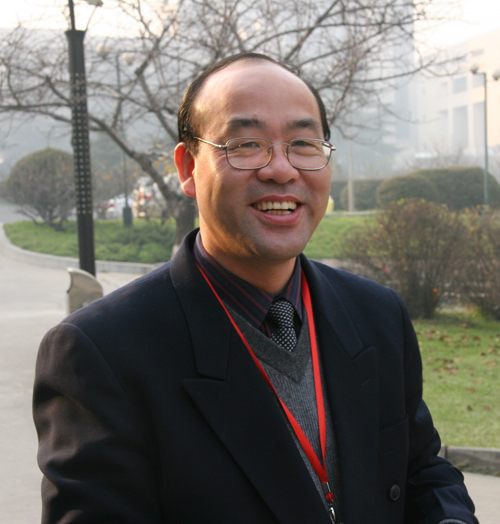 來茂德
來茂德