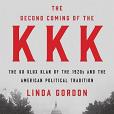
《The Second Coming of the KKK》是Liveright出版的圖書,作者是Linda Gordon
基本介紹
- ISBN:9781631493690
- 作者:Linda Gordon
- 出版社:Liveright
- 出版時間:2017年10月24日
- 頁數:288
- 定價:USD 27.95
- 裝幀:Hardcover
內容簡介
By legitimizing bigotry and redefining so-called American values, a revived Klan in the 1920s left a toxic legacy that demands reexamination today. A new Ku Klux Klan arose in the early 1920s, a less violent but equally virulent descendant of the relatively small, terrorist Klan of the 1870s. Unknown to most Americans today, this "second Klan" largely flourished above the Mason...(展開全部) By legitimizing bigotry and redefining so-called American values, a revived Klan in the 1920s left a toxic legacy that demands reexamination today. A new Ku Klux Klan arose in the early 1920s, a less violent but equally virulent descendant of the relatively small, terrorist Klan of the 1870s. Unknown to most Americans today, this "second Klan" largely flourished above the Mason-Dixon Line—its army of four-to-six-million members spanning the continent from New Jersey to Oregon, its ideology of intolerance shaping the course of mainstream national politics throughout the twentieth century. As prize-winning historian Linda Gordon demonstrates, the second Klan’s enemies included Catholics and Jews as well as African Americans. Its bigotry differed in intensity but not in kind from that of millions of other WASP Americans. Its membership, limited to white Protestant native-born citizens, was entirely respectable, drawn from small businesspeople, farmers, craftsmen, and professionals, and including about 1.5 million women. For many Klanspeople, membership simultaneously reflected a protest against an increasingly urban society and provided an entrée into the new middle class. Never secret, this Klan recruited openly, through newspaper ads, in churches, and through extravagant mass "Americanism" pageants, often held on Independence Day. These "Klonvocations" drew tens of thousands and featured fireworks, airplane stunts, children’s games, and women’s bake-offs—and, of course, cross-burnings. The Klan even controlled about one hundred and fifty newspapers, as w
